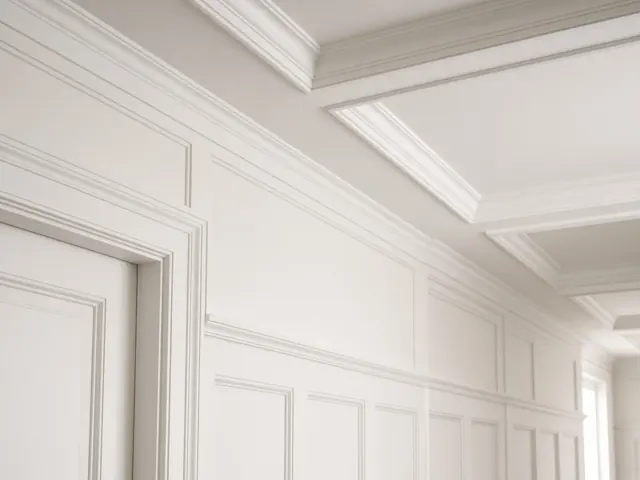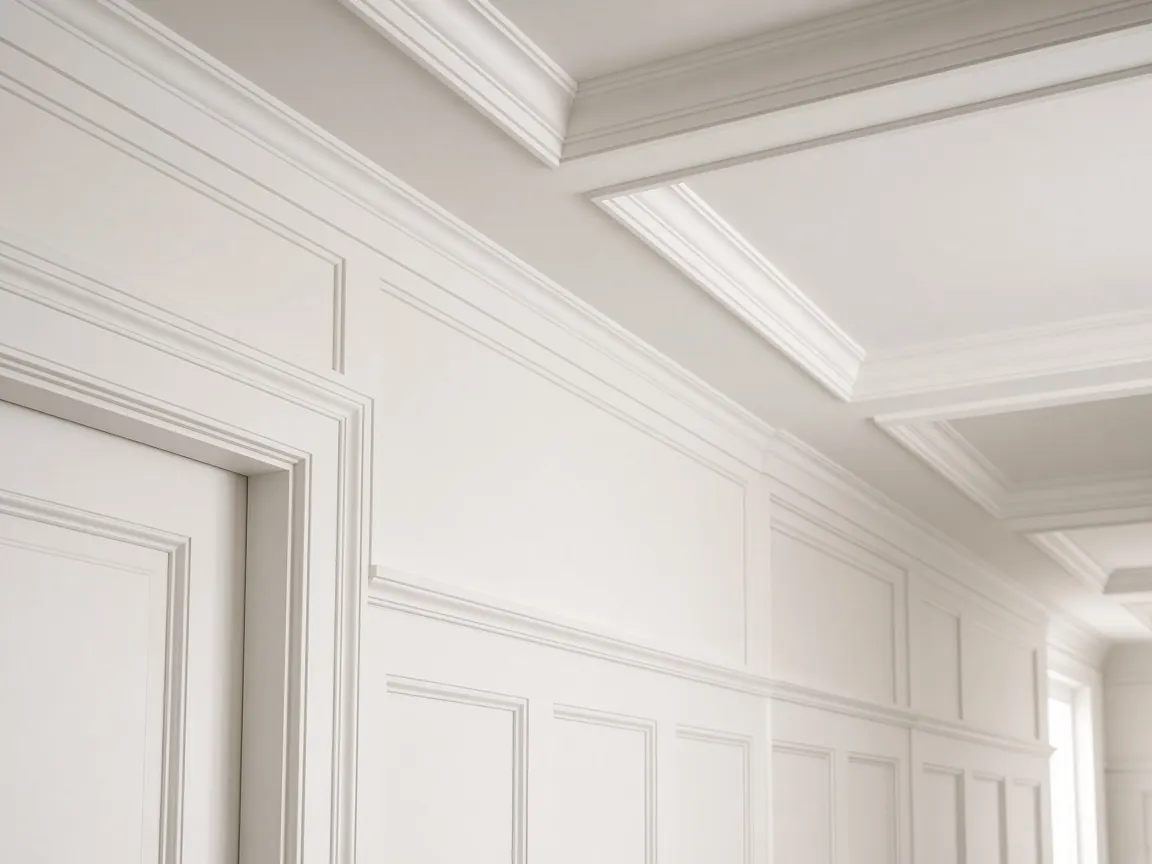
Wainscoting covers the lower part of a wall with panelling or trim, usually about a third of the wall height, although taller versions are popular now. Done well, it makes a room feel finished and protects walls where chairs, bags and boots hit them. Done badly, it looks stuck on. Here's how to decide.
The main styles
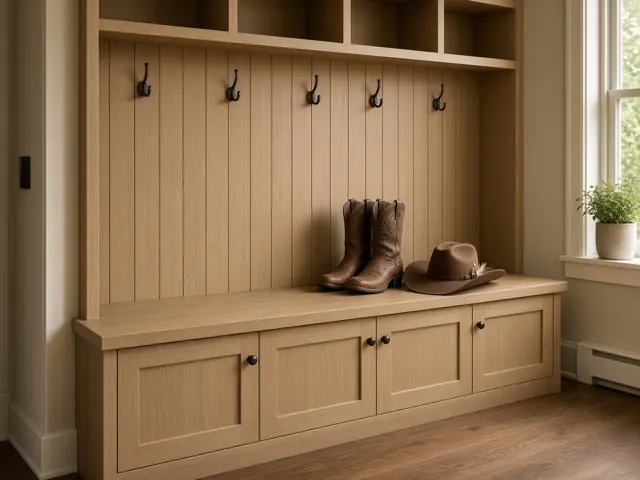
- Board-and-batten: vertical battens over a flat panel, capped with a ledge. Clean, a little farmhouse, very popular in mudrooms and entries.
- Picture-frame (box) moulding: applied moulding in rectangles on drywall. A traditional look for dining rooms and halls, and budget-friendly.
- Flat or recessed panel: Shaker-style panels, more substantial and furniture-like.
- Raised panel: the most formal. Suits traditional homes.
- Shiplap or V-groove: horizontal or vertical boards, casual and textured.
Where it earns its keep
- Mudrooms and entries: protects walls from boots, bags and hockey gear. Pair it with a bench and hooks. See mudroom bench ideas.
- Stairwells: following the stair angle adds a lot of character, but it's also the most labour-intensive layout.
- Dining rooms: classic chair-rail height protects walls from chair backs.
- Bedrooms and nurseries: a taller board-and-batten wall works as a headboard feature.
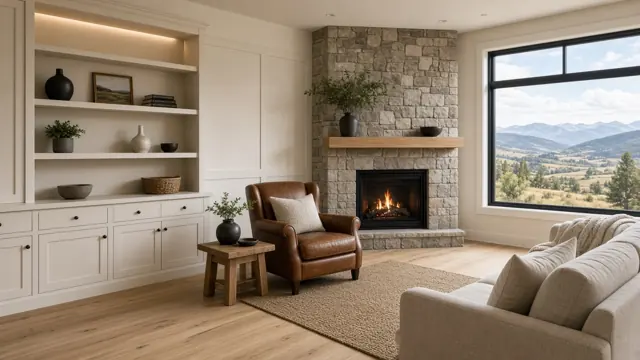
- Bonus rooms and basements: gives a plain drywall room some architecture.
What drives the price
We don't publish one price for wainscoting because the variables matter more than the material:
- Linear footage and height. Taller panels need more material and layout work.
- Style. Picture-frame moulding is quicker than raised panel.
- Interruptions. Outlets, switches, windows, vents and stair angles each add cuts and time.
- Wall condition. Wavy walls need more scribing and filling.
- Paint. Factory-primed MDF still needs filling, caulking and finish coats, and someone has to do them.
Our finish carpentry cost guide collects published Calgary price ranges for trim work. For a real number, send us a photo and rough measurements through the quote form.
So, is it worth it?
If a room feels plain or its walls take a beating, usually yes. Wainscoting is a relatively small project that changes how a room feels, and it can be done in days rather than weeks. It's less worth it in a room you plan to gut soon, or if the style fights the rest of the house.
Frequently asked questions
How high should wainscoting be?
Traditional wainscoting is around a third of the wall height. Taller panelling, up to about two-thirds, is popular now. The best height relates to window sills, chair rails and the room's proportions.
MDF or wood for wainscoting?
Paint-grade MDF is stable, smooth and cost-effective for most dry rooms. In bathrooms and other damp areas, choose moisture-resistant MDF, PVC or primed wood, and seal it properly.
Can wainscoting go in a bathroom?
Yes, outside the shower and with moisture-resistant materials and good sealing. It's a popular way to finish a powder room.