A basement floor has a harder job than any other floor in the house. It sits on a concrete slab, it's below grade, and if a pipe or a sump ever lets go, it's the floor that finds out first. Here's how the common choices compare for a typical Calgary basement.
Start with the slab, not the flooring
Before choosing a product, check the slab. Is it dry? Is it flat? Has there ever been water? Every flooring manufacturer sets moisture and flatness limits for concrete, and the warranty depends on meeting them. A slab that's out of flat will show through thin floors as hollow spots and clicking joints, so grinding high spots or levelling low spots is often the first line in the budget.
Luxury vinyl plank (LVP)
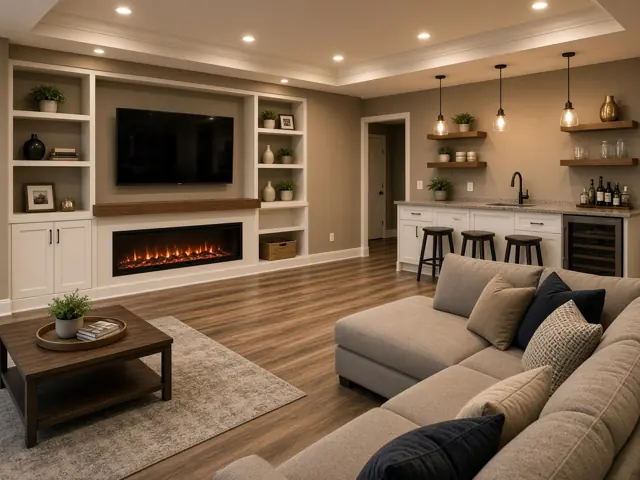
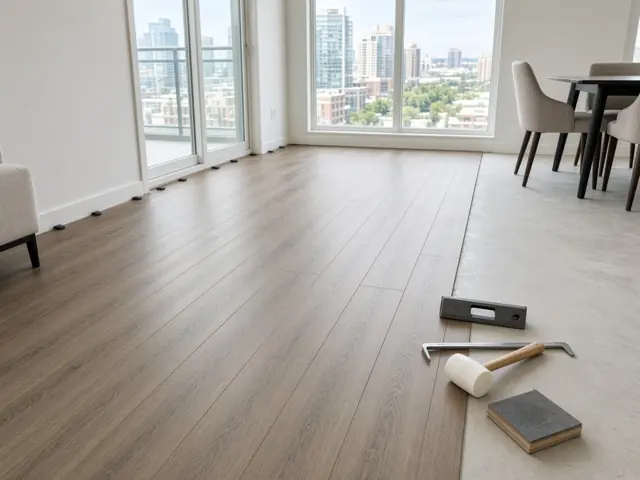
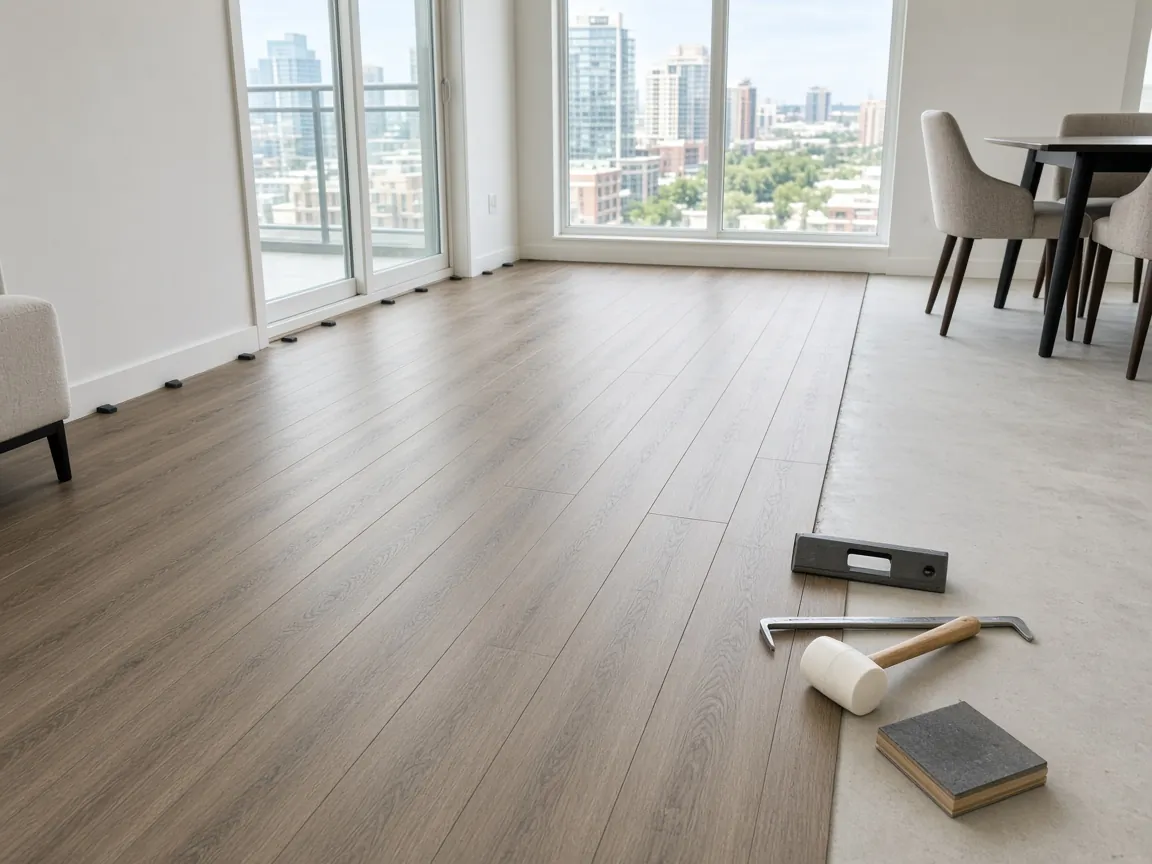
The default choice for most Calgary basements, for good reason. Rigid-core LVP is made to tolerate water on its surface, it floats over the slab (often with an underlay), and it feels warmer underfoot than tile. If a small leak happens, planks can often be lifted, dried and reused.
Watch for: thin, cheap planks that telegraph every slab dip, and underlays that double up with a pre-attached pad (most manufacturers don't allow both).
Engineered hardwood
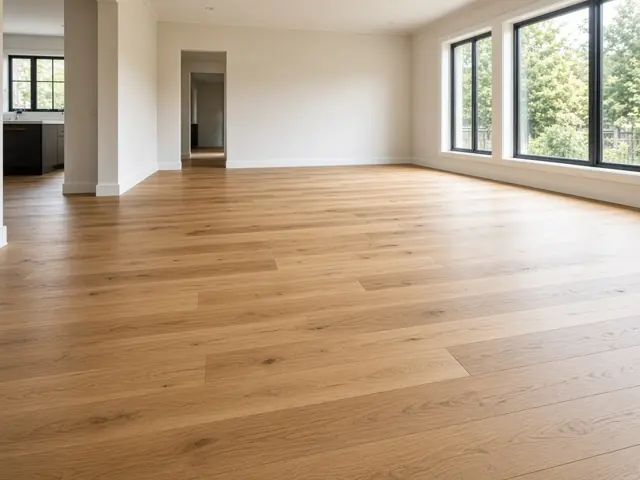
If you want real wood downstairs, engineered is the option. The National Wood Flooring Association's installation guidelines say solid hardwood should not go below grade unless the manufacturer specifically allows it, while engineered products are generally suitable on and below grade when moisture is within the manufacturer's limits.
Watch for: humidity. Calgary air is very dry in winter, and wood moves with humidity. Expect seasonal gaps unless you manage humidity in the house.
Laminate
Laminate looks good and is hard-wearing, but its core is a wood-fibre board. Many newer products are marketed as water-resistant, but read the warranty carefully. In a basement where water is a real risk, LVP is usually the safer call.
Tile
Porcelain tile is completely unbothered by water, which makes it the right answer for basement bathrooms, laundry rooms and entries. In a whole basement it can feel cold unless you add in-floor heat. It also needs a flat, stable slab and the right membrane if there's any cracking.
Carpet
Carpet is still warm and quiet for a family room or kids' space. The trade-off is that it doesn't forgive a flood. Many people now use LVP throughout and add area rugs instead.
Our take
For most Calgary basements: LVP in living areas, porcelain tile in wet areas, and engineered hardwood only if the slab is dry and you're willing to manage humidity. For costs, see our flooring installation cost guide. For an install, see our flooring service.
Frequently asked questions
Can you put hardwood in a basement in Calgary?
Solid hardwood is generally not recommended below grade. The NWFA guidelines say not to install it below grade unless the manufacturer allows it. Engineered hardwood is usually approved for basements when the slab is within the manufacturer's moisture limits.
Is LVP waterproof?
Rigid-core LVP is made to tolerate water on the surface, but water can still get under it at the edges and seams. Clean up spills and leaks quickly, and check the specific product's warranty.
Do I need a subfloor in my basement?
Not always. Many floating floors can go over a dry, flat slab with the manufacturer's underlay. A dimpled or insulated subfloor panel can add warmth and a gap from the concrete. Ask about it when you plan the basement.
Sources
Rules, programs and prices change. Always confirm details with the source before you plan or budget.